







Breaking Through: How Russell County Built a Child Care Coalition That Refused to Accept “No”
“We don’t take no for an answer. If it’s a no, then we walk around it and we find a new way in.” – Melinda Olson
For the members of the Russell County Child Care Coalition, that philosophy has become less of a motto than a necessity. Over the years, the group has encountered one barrier after another as it worked to expand child care—from zoning restrictions and neighborhood opposition to funding challenges, provider recruitment, and property taxes. Each time, the coalition has adapted, found another resource or brought another community partner to the table.
The result is a growing child care effort built on a simple willingness to keep finding the next way forward.
In Russell County, the need was becoming increasingly difficult to ignore. A hospital struggling with absenteeism, employers trying to recruit workers and child care providers approaching retirement all pointed to the same problem: There simply weren’t enough child care options. For local leaders, the shortage was becoming more than an inconvenience for families—it was affecting the community’s ability to maintain a reliable workforce and attract new employees and businesses.
Recognizing that child care was deeply connected to the county’s economic future, community members from health care, economic development, Extension, and the local child care community began working together. What started as several people pursuing related efforts gradually became the Russell County Child Care Coalition, a countywide effort focused on strengthening existing providers, creating new capacity and breaking down barriers.
For its determination to identify and overcome significant barriers to child care access, the coalition has been recognized by Child Care Aware of Kansas as a Child Care Community Champion under the No Barriers, Bright Futures pillar.
“We don’t take no for an answer. If it’s a no, then we walk around it and we find a new way in.”
A Workforce Problem Becomes a Community Priority
The roots of Russell County’s child care efforts go back several years, when local leaders began seeing the consequences of inadequate care firsthand. While serving on the Russell Hospital Board, Melinda Olson saw the hospital and school district struggling to recruit employees and dealing with absenteeism because reliable child care was difficult to find. An earlier effort to expand child care ultimately fell through, while several local providers retired or prepared to retire, putting even more pressure on an already limited system.
Jamie Malone became involved through her work with local economic development, where she heard about businesses and new opportunities being pursued for the community. Her immediate question was simple: If those businesses came to Russell County, where would their employees find child care?
That question helped frame child care as an economic development issue—not simply a service families need. When employees cannot find reliable care, businesses can experience absenteeism, difficulty recruiting workers, and challenges retaining the employees they already have. In Russell County, local leaders recognized that solving the child care shortage would benefit the entire community.
Building a Coalition Around a Shared Goal
“It’s not one thing, it’s a lot of things that make a big difference,” Olson said.
The Russell County Coalition did not begin with a large organization or an established funding stream. Instead, it grew from people already working in different corners of the community. Melinda connected the effort to the local Extension system through Jessica Kootz. Jamie brought her economic development perspective. Kim Stoppel was already working toward establishing a child care center through a local church.
Those individual efforts eventually came together around one shared goal: improving child care throughout Russell County.
The coalition’s structure became integral to its strength. Rather than asking every member to do everything, members took ownership of different pieces of the challenge. Jamie focused heavily on supporting existing providers. Melinda took the lead on creating an in-home child care opportunity. Kim continued working toward a new child care center.
Although their individual projects were different, they remained connected by a common purpose and consistently stepped in to support one another when new challenges emerged. “These are definitely caring people,” Olson said. “They put in a lot of effort and time and work. If they commit to something, they commit wholeheartedly.”
“These are definitely caring people… They put in a lot of effort and time and work. If they commit to something, they commit wholeheartedly.”
Letting the Data Set the Direction
One of the coalition’s most important early steps was understanding the actual scope of Russell County’s child care needs.
In April 2025, the Northwest Kansas Innovation Center supported a community needs assessment. The assessment identified a need for at least 39 additional child care slots, including families actively searching for care, families dissatisfied with their current arrangements, and children whose parents were taking them out of town for care. Another 16 slots were expected to be lost as providers retired.
The assessment also helped the coalition determine where to focus its efforts. 41% of parents surveyed preferred family child care homes, compared with 17% who preferred a child care center. With the existing center already full and family child care providers having limited openings, the coalition knew it needed to both protect existing capacity and create new spaces.
That distinction became critical. The coalition was trying to prevent the community from losing the child care capacity it already had while creating additional opportunities for families.
Supporting the Providers Already Serving Russell County
Before adding new spaces, the coalition recognized that existing providers needed to know their community valued their work.
The group secured funding to provide eight child care providers with items from their individual wish lists. Rather than assuming what providers needed, coalition members asked them directly and used the funding to provide practical support.
That work reflects an important part of the coalition’s strategy: Increasing capacity is only sustainable if existing providers can continue operating. In a community already facing provider retirements, every closure would make the shortage worse. Supporting the providers already caring for Russell County’s children became just as important as opening new programs.
Before adding new spaces, the coalition recognized that existing providers needed to know their community valued their work.
Finding a Way Around Every Barrier
“Just another barrier, just another hope.” That’s how Malone described the hurdles that kept coming as the coalition worked toward opening an in-home child care facility.
The team’s first plan involved a modular child care facility supported through a Dane G. Hansen Foundation program. Local zoning restrictions, however, meant the building could not be placed where it would be most accessible to employees. Moving it elsewhere would have introduced additional infrastructure costs, while a traditional stick-built facility proved too expensive. The project was ultimately abandoned.
Instead of stopping, the coalition changed direction.
Members located a house on J Street that could be converted into a child care home, but finding the property was only the beginning. The coalition had to secure funding, purchase insurance, navigate zoning requirements and address concerns from neighborhood residents. At one point, neighbors strongly objected to the proposed child care use, citing concerns about traffic, noise and operating hours.
The coalition responded with solutions rather than arguments. Funding was used to improve the property’s appearance, remove overgrown landscaping, replace an aging fence, and improve visibility. A circular driveway was added so families could enter and exit without driving through the neighborhood.
When the zoning commission initially proposed hours that would have made the facility unusable for hospital employees working early or extended shifts, the coalition advocated for an earlier opening time. The final approval allowed the daycare to open as early as 6:30 a.m.
Over time, the neighborhood’s concerns began to fade. Residents who had initially objected eventually apologized, and some began commenting positively on the property’s improvements.
What began as another barrier became another example of the coalition’s willingness to listen, adapt and keep moving.
“Just another barrier, just another hope.”
Businesses and Community Partners Helped Make It Possible
Russell County’s experience also demonstrates that child care capacity cannot be built by child care providers alone.
Local economic development leaders were involved from the beginning. Malone’s work with the Russell County Economic Development board helped keep child care connected to conversations about attracting new businesses and growing the local economy. Economic development staff also helped connect the coalition with a prospective child care provider who had moved back to Russell and was looking for opportunities in the community.
The support didn’t end there. Economic development also contributed tangible resources, including funding for smoke and carbon monoxide detectors for the new in-home facility and plans to provide similar support for the future center. The coalition received two significant private donations, along with grants from the Russell County Area Community Foundation and the Dane G. Hansen Foundation, which helped make the J Street property possible.
Those investments represent more than support for a building. Every additional child care space can make it easier for a parent to accept a job, maintain consistent hours, or return to the workforce. For employers, reliable child care can mean fewer employees missing work because of last-minute care disruptions and a stronger position when recruiting people to the community.
Tackling the Barriers That Threaten Providers
The coalition has also learned that creating child care capacity means confronting policies that can make it harder for providers to operate.
When several in-home child care properties were reassessed from residential to commercial property, providers faced a significant increase in property taxes. Malone explained that the assessment rate discussed by the coalition increased from 11% for residential property to 25% for commercial property. Providers told county commissioners that the added cost could ultimately affect what families would have to pay for care.
Rather than treating the issue as someone else’s problem, the coalition became an advocate for providers. Members attended county meetings, listened to providers testify about the impact and helped connect them with state-level policymakers. The group also brought local child care providers together with State Representative Troy Waymaster to discuss the issue.
It is a fitting example of how the coalition’s definition of child care capacity has evolved. Capacity is not limited to the number of slots available today, but is also about whether providers can afford to stay in business tomorrow.
Capacity is not limited to the number of slots available today, but is also about whether providers can afford to stay in business tomorrow.
The Work Continues
With the J Street child care home nearing operation, coalition members are turning their attention toward the next piece of the puzzle: Starting Point Daycare Center.
The proposed center has its own challenges. Fire safety requirements, licensing and funding have all created additional hurdles. A local church has offered its education wing for the project and plans to cover utilities, insurance and payroll costs, creating a significant foundation for the center’s operation. The project has also received private donations, while coalition members continue looking for additional funding opportunities.
When confronting these challenges, Olson and Malone are adamant that there is always another avenue to explore. “Money has come out of our own pockets,” Malone said. To other coalitions facing similar challenges, she offered simple advice: “Ask anybody and everybody for a donation.” Olson agreed. “Utilize everybody in your community,” she said. “Don’t be afraid to knock on somebody’s door and say, ‘This is our plan. Do you have something that can help us?’”
One recent idea came from Child Care Aware of Kansas’ Community Outreach & Engagement Coordinator, Cierra Munk, who suggested that the coalition explore tax credits as another funding source. The idea opened a new avenue for fundraising, with the center beginning to approach potential local supporters about purchasing the credits. It is another small example of the coalition’s larger approach: when one path closes, look for another.
That persistence is perhaps the clearest thread running through Russell County’s story.
The coalition’s board members do not have children currently in child care. They are not solving a problem that directly affects their own households. They are doing the work because they understand that child care affects the entire community. They understand that when child care is unavailable, everyone feels the impact—from parents and children to providers, schools, hospitals, and local businesses. They have demonstrated that solving a community-wide problem requires a community-wide response.
Russell County’s experience offers a powerful example for other communities facing similar challenges. Progress did not come from a single project, funder, or organization. It came from people willing to share their expertise, ask for help, invest their own time and resources, listen to providers, involve economic development and business leaders, and keep looking for solutions when the first plan failed.
The Russell County Child Care Coalition has encountered plenty of closed doors. But instead of treating those barriers as the end of the story, they have treated them as invitations to find another way forward. Olson insisted, “Never say the door has been shut. It’s never shut. There is always another opening. There’s a window. There’s a crack. There is some way you can get through to the other side to get your project done.”
That determination is what the No Barriers, Bright Futures recognition celebrates. Russell County is not finished building its child care system, and the coalition would be the first to say there is still work ahead. But with providers, businesses, economic development leaders, community organizations, funders, and local advocates working together, the county has already shown what can happen when a community decides that child care is essential infrastructure—and refuses to stop looking for a way forward.
“Never say the door has been shut. It’s never shut. There is always another opening. There’s a window. There’s a crack. There is some way you can get through to the other side to get your project done.”
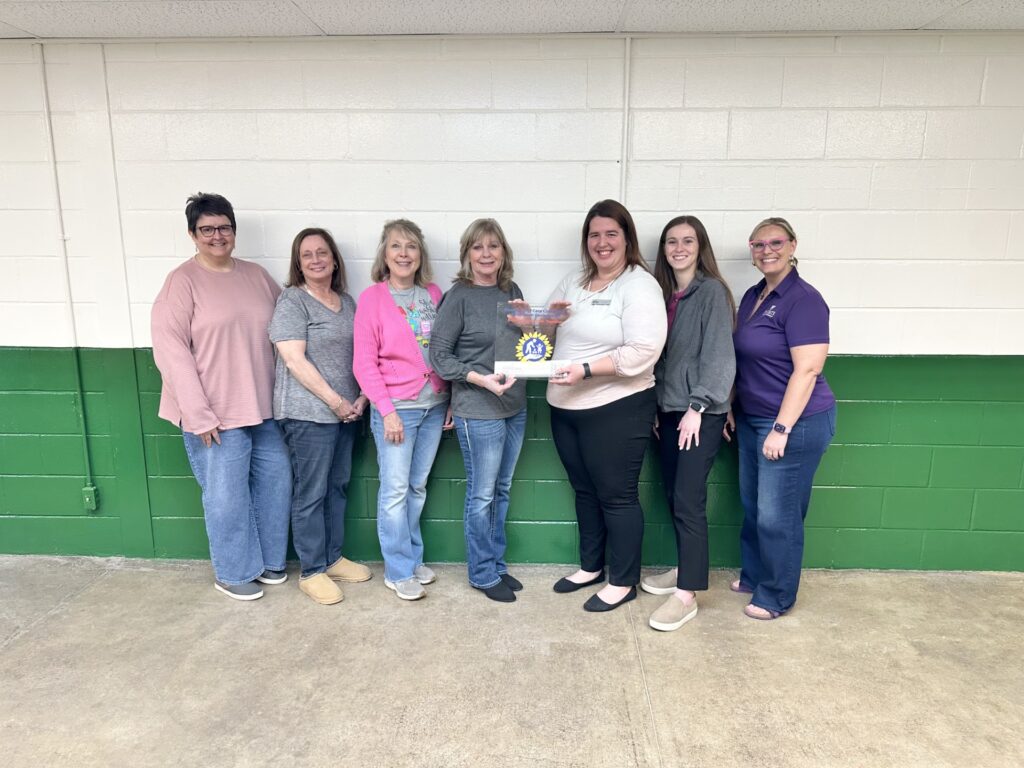
The Russell County Coalition would like to thank the following for their support:
Dana Jo Stanton, Northwest Kansas Economic Innovation Center
Jan Kuckelman and Ciera Munk, Child Care Aware of Kansas
Angela Muller and the Russell County Area Community Foundation
Dane G. Hansen Foundation
Myers Family Memorial Trust
John O. Farmer III
Nancy Gaines Holland
Jessica Kootz and K-State Research and Extension, Midway District, Russell & Ellsworth County
Debbie Kootz
Mike Parsons and Ryleigh Wagner, Russell County Economic and Development and Convention and Visitor’s Bureau
Klema Apple Market
Papa Murphy’s of Hays
Russell Council of Catholic Women, St Mary Queen of Angels Catholic Church, Russell
Catholic Youth Organization, St Mary Queen of Angels Catholic Church, Russell
Dream Theater
Troy Waymaster, Representative, 109th District, State of Kansas
Chasen Katz, Attorney at Law
Jim Malone, CPA
Related Posts

For Businesses
Oct 22, 2026
Listening to Kansas Communities: What We’re Learning About the Child Care Landscape
Child care is more than a service for families with young children. It is an essential part of a thriving…

For Businesses
Oct 15, 2026
Meeting the Need: ABC Christian Childcare & Education Center adds overnight hours
Originally published in the Fall 2026 edition of Rural Connect Magazine, a publication of Rural Community Partners highlighting the people,…
-
For Communities
Oct 8, 2026
Building a Stronger Future Together: Kelly Horn’s Journey to First Choice Support Services
Building a Stronger Future Together: My Journey to First Choice Support Services Sometimes the best opportunities in life come from…