






What Does Quality Child Care Look Like in Practice?

When you’re looking for child care, it can be easy to focus on what you can see at first glance. Is the classroom clean? Are there plenty of toys and books? Does the space look welcoming? Is there a fenced-in outdoor area? These things matter, but quality child care goes much deeper than what a classroom looks like.
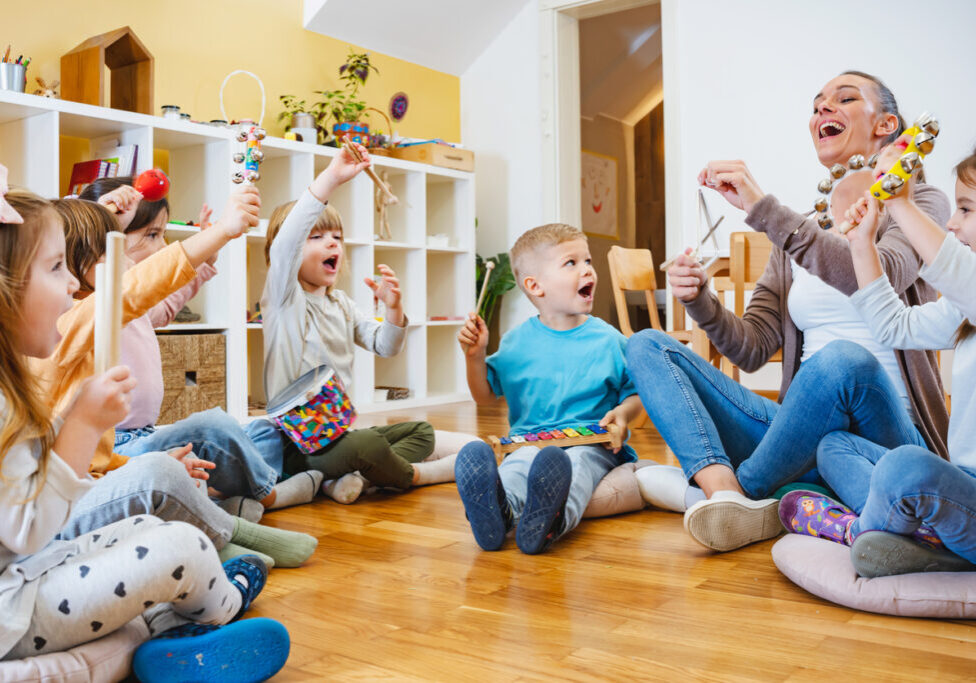
A toddler pulls a copy of The Very Hungry Caterpillar from a bookshelf set carefully at eye level, and a child care provider sits down beside her on the rug. Instead of simply reading the words on the page, they talk about the pictures. The child points to the illustrated piece of cheese, and the provider asks if she likes how cheese tastes. Another child wanders over, and then another, and suddenly, a two-minute interaction has become a learning and connecting moment for several children.
Across the room, another provider helps a child who is struggling to join a group activity by offering encouragement and helping them practice transferring beans from one plate to another with tweezers. Outside, children investigate an insect they found in the grass while their caregiver listens to their questions and helps them count its legs.
None of these moments would necessarily stand out as a major event in the day. There may be no elaborate activity, expensive equipment, or perfectly decorated learning space involved. But for your child, these everyday moments can make a big difference.
Quality child care is less about what a program looks like and more about what children experience while they are there. It’s about the relationships they build, the way adults respond to them, the opportunities they have to learn and explore, and whether they feel safe, supported, and known.
Start with Relationships
Young children learn through relationships. The way a caregiver talks with your child, responds to their needs, and helps them navigate new experiences is an important part of their experience in child care.
When you’re visiting a program, pay attention to how educators interact with the children in their care. Do they greet children warmly? Do they get down on a child’s level when talking with them? Do they listen when children have something to say? When a child is upset, do they respond with patience and support?
Quality might look like an educator sitting beside a child who is having a difficult day instead of simply telling them to calm down. It might look like a provider noticing that a child who is usually eager to participatehas been quieter than usual and taking the time to check in. These interactions may not make it into a classroom photo or brochure, but they are an important part of creating a place where children feel secure and supported.
Look Beyond the Activities
A child care program doesn’t need a packed schedule of elaborate activities for children to be learning. In fact, some of the best learning opportunities can happen during ordinary parts of the day. A child stacking blocks might be learning about balance, problem-solving, and persistence. A conversation during snack might introduce new vocabulary, or a walk outside might lead children to notice changes in the weather, count birds, or ask questions about the world around them.
Quality educators pay attention to what interests children and use those moments to encourage exploration and learning. They ask questions, listen to children’s ideas, introduce new words and concepts, and help children make connections.
When you’re visiting a child care program, don’t worry if you don’t see a complicated craft project or a classroom full of specialized learning materials. Instead, look at how educators engage with children during the activities that are already happening.
Some of the best learning opportunities can happen during ordinary parts of the day.
Safety is More Than a Checklist
Every family wants their child to be safe in child care. Physical safety is an important part of quality, including appropriate supervision, secure spaces, clean environments, and practices that protect children’s health and well-being. Just as importantly, however, children also need to feel emotionally safe. Predictable routines, caring relationships, and responsive adults can help children know what to expect and feel comfortable expressing their needs.
During a visit, notice how children seem to feel in the space. Do they appear comfortable approaching educators? Do they ask adults for help? Do educators seem attentive to what children are communicating, even when children aren’t using words?
You can also ask questions about how the program handles things like transitions, challenging behaviors, meals, naps, and separation from families. The answers can give you a better sense of how educators support children throughout the day.
Quality child care creates an environment where children can learn, explore, make mistakes, and be themselves while knowing a trusted adult is nearby.
Quality is an Ongoing Process
You may not see everything that contributes to quality during a child care tour, because a lot of the work happens behind the scenes. Child care providers and early childhood educators are continually learning about child development, classroom practices, health and safety, family engagement, and the individual needs of the children they serve. Professional development, coaching, and other forms of support give providers opportunities to build their skills, ask questions, and learn from others.
Why does that matter to families? Quality isn’t something a provider achieves once and then checks off a list. It is an ongoing process of learning, reflecting, and finding new ways to support children. A provider doesn’t have to have every answer on day one. What matters is having opportunities to keep learning and growing.
[Quality] is an ongoing process of learning, reflecting, and finding new ways to support children.
What Should Families Look For?
Choosing child care is a big decision, and it isn’t always easy to know what questions to ask. A website or classroom photo can tell you what a program looks like, but a visit can tell you much more about what your child may experience there.
As you visit programs, consider looking for:
- Warm, responsive relationships. Do educators listen to children, respond to their needs, and treat them with patience and respect?
- Engaged educators. Are adults actively participating in children’s play and learning rather than simply supervising from a distance?
- A safe and welcoming environment. Do children seem comfortable, supported, and able to explore?
- Opportunities to learn through everyday experiences. Are children encouraged to ask questions, solve problems, communicate, and explore their interests?
- Communication with families. Do educators share information about your child’s day and invite you to share information about your child?
- A commitment to learning and growth. Does the program participate in professional development, coaching, or other opportunities to strengthen its practices?
- Respect for your child as an individual. Do educators recognize that every child has different interests, needs, personalities, and ways of learning?
There isn’t one way that a quality child care program has to look. A family child care home may look very different from a large child care center. A program in a rural community may have different resources and approaches than one in a larger city. The important question isn’t, “Does this look like the perfect child care program?” It’s “What will my child experience here?”
Don’t Be Afraid to Ask Questions
As a parent or caregiver, you don’t have to be an early childhood expert to evaluate a child care program. You can ask questions about the things that matter most to your family.
For example:
- How do you help children adjust when they first start?
- How do you handle challenging behaviors?
- How do you communicate with families during the day?
- What happens when my child is upset?
- How do you support children’s individual interests and needs?
- What opportunities do educators have for professional development?
Pay attention not only to the answers, but also to how comfortable the educators are talking with you about them.
A strong relationship between families and child care providers is another part of quality. You know your child better than anyone, and your child’s educators see them in a different setting. Sharing what you know, asking questions, and communicating openly can help everyone better understand and support your child.
Quality Can Look Different for Every Family
There is no single checklist that can tell you which child care program is right for your family. Your family’s needs matter, too. Location, hours, cost, transportation, availability, language, and other practical considerations can all play a role in your decision. Within those realities, looking at the quality of your child’s experience can help you make a more informed choice.
Quality might look like a caregiver who knows exactly how your child likes to be comforted, or like an educator who turns your child’s fascination with bugs into a week of questions and exploration. It may look like a provider who takes the time to tell you about something your child accomplished that day.
Sometimes quality looks like a colorful classroom filled with activities. Just as often, it looks much simpler: an adult sitting on the floor and listening to a child, a caregiver helping a child work through frustration, a provider remembering what your child told them yesterday, or children having time to explore, ask questions, make mistakes, and try again.
When you’re looking for child care, look beyond the toys, decorations, and activities. Look for the relationships, interactions, and everyday experiences that help your child feel safe, supported, and ready to learn. Those are the moments where quality takes shape.
Related Posts

For Communities
Mar 17, 2026
Turning Passion into Action: Inspiring Others to Join the Early Childhood Workforce
Finding My Purpose in Early Childhood I have always been passionate about children and felt a special connection with them….
-
For Communities
Jun 6, 2024
Wages in the Child Care Workforce Remain Low Despite Gains
Early care and education professionals have historically faced substantial obstacles when it comes to maintaining a healthy and motivated workforce.

For Businesses
Dec 5, 2022
How 2Gen Approaches Support Family Well-Being
We are witnessing a sea change in early childhood, with providers and systems leaders embracing more holistic approaches to improving